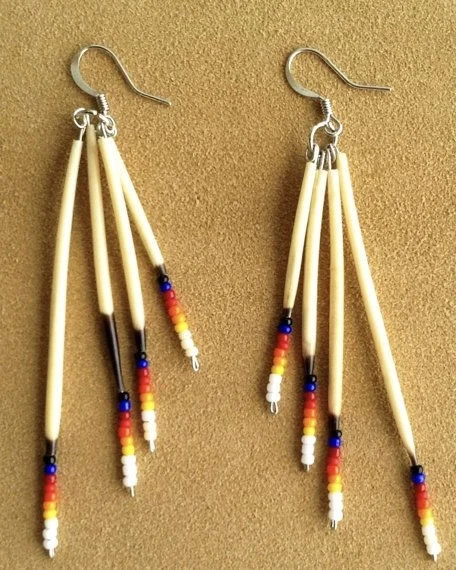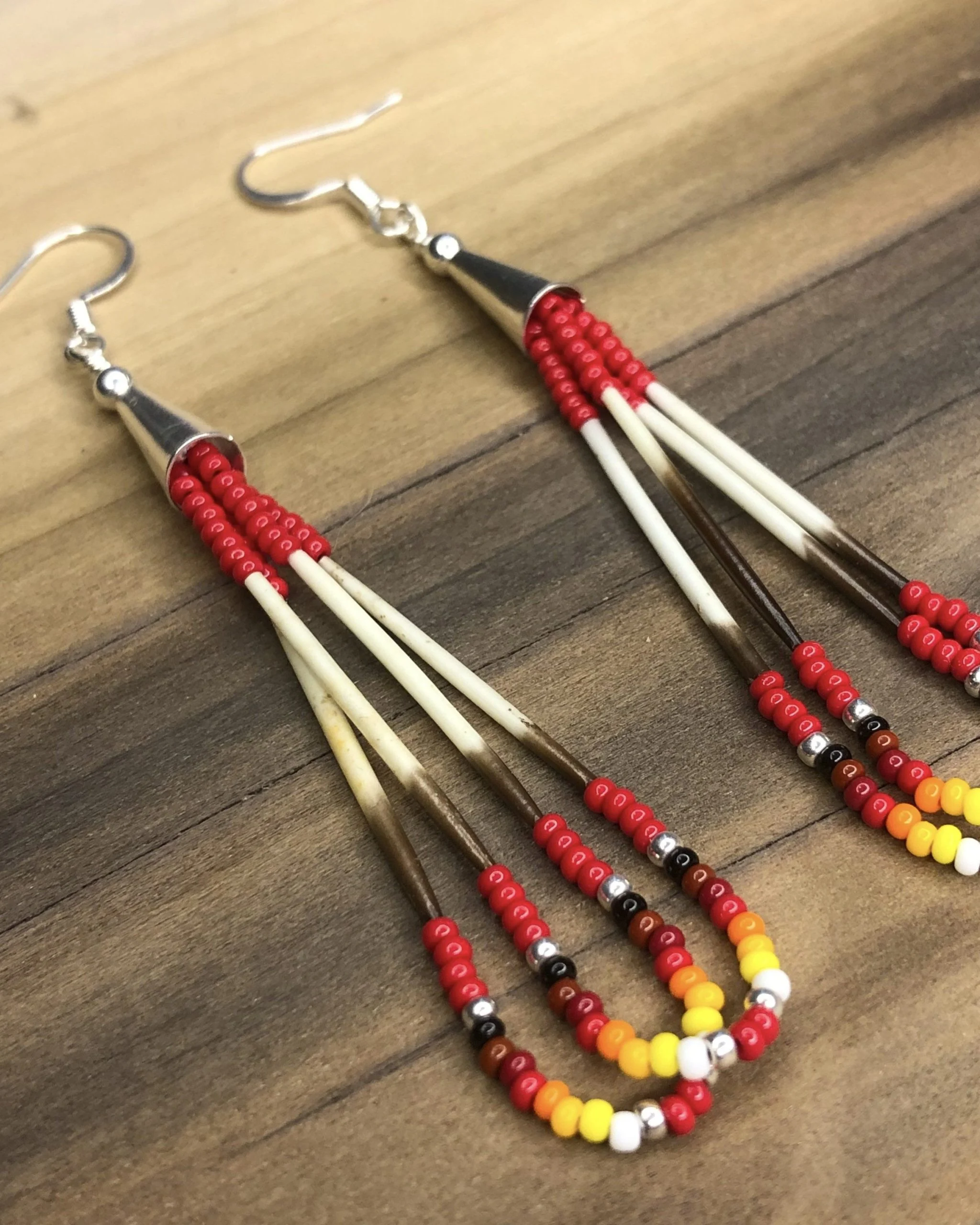
Porcupine Quill Earrings
Quillwork is an art form unique to First Peoples in North America. It was practiced for hundreds of years before the arrival of Europeans. During the 18th and 19th centuries quilling arts reached one of their highest levels of development. Quillwork was used to decorate shirts, moccasins, and jewelry. This practice has endured over the centuries to become one of the most recognizable art forms of Indigenous Peoples today.
The abundant population of porcupines in the upper Midwest and Great Plains regions gave rise to a variety of quillwork techniques. Quills were dyed with mineral or vegetable dyes then worked into personalized designs. Prior to the 20th century, only women made decorative quillwork. Designs belonged to the woman who created them. The art form was thought to be sacred. Quillwork is very tedious and time consuming, and each quill must be attached to the background with a small stitch. With the arrival of glass beads in the New World quillwork became less common. Fortunately, some artists kept the tradition alive, resulting in an artistic revival in the 20th century.